
Software
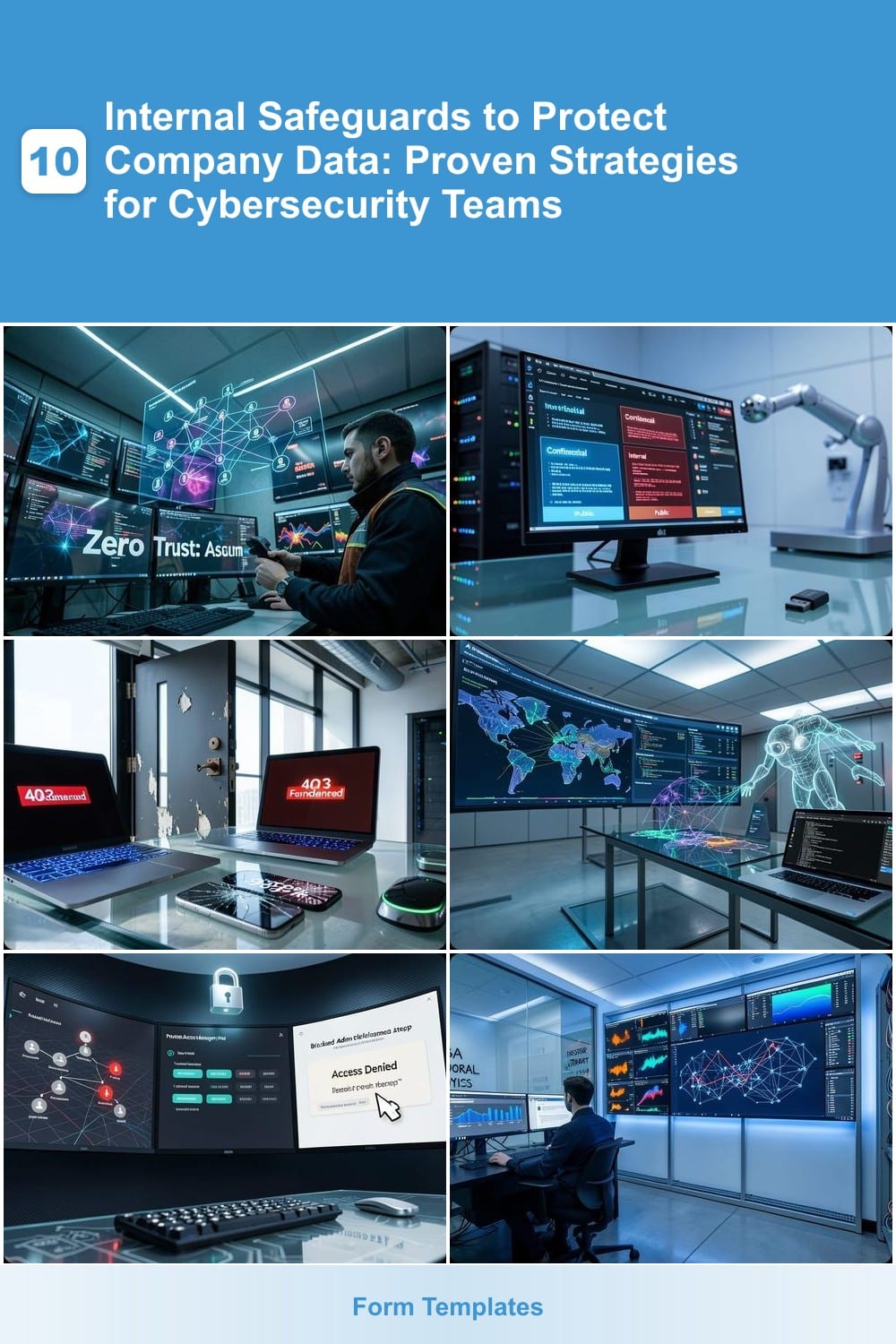
Cyber threats evolve daily, but strong internal safeguards remain your first line of defense. These 10 proven strategies empower cybersecurity teams to fortify data protection before breaches occur, blending technical controls with human-centric policies.
Zero Trust Network Access Implementation

Forget "trust but verify"—zero trust network access flips the script by assuming no one is trusted by default. This model forces continuous authentication for every user, device, and application, slashing the risk of lateral movement when credentials are compromised.
Implementing zero trust starts with micro-segmentation to isolate critical assets, then layers multi-factor authentication (MFA) and device posture checks before granting access. Solutions like BeyondCorp Enterprise or Palo Alto Prisma Access automate these verifications in real-time, even for remote workers. The result? 90% fewer successful breaches from stolen credentials, according to Gartner.
This approach is ideal for regulated industries (healthcare, finance) or companies with hybrid workforces, where traditional perimeter security fails. Start with a pilot in your most sensitive departments to prove its value before scaling. ✨
Automated Data Classification Policies

Tired of manually sorting through files to identify sensitive data? Automated data classification policies use AI to scan, analyze, and tag documents in real-time—cutting the guesswork and reducing human error by up to 80%. These systems automatically classify files as confidential, internal, or public based on content, metadata, and contextual clues, then enforce access controls accordingly.
The best solutions integrate with your existing tools, like Microsoft Purview or Symantec DLP, and support customizable rulesets (e.g., flagging Social Security numbers or proprietary algorithms). They also adapt to evolving threats, ensuring intellectual property and customer records stay protected without manual oversight. For example, a financial firm could auto-tag client portfolios as "high-risk" and restrict access to approved personnel only.
This approach is ideal for compliance-heavy industries (healthcare, finance) or any team drowning in unstructured data. By prioritizing protection where it matters most, you turn reactive security into a proactive shield. ✨
Multi-Factor Authentication Enforcement

Passwords alone are like leaving your front door unlocked—99.9% of automated attacks exploit weak credentials, but multi-factor authentication (MFA) adds that extra lock. By requiring hardware tokens, biometrics, or push notifications beyond passwords, MFA creates a barrier that even stolen credentials can’t bypass. This is especially critical for remote workforces and privileged accounts where access risks are highest.
Modern MFA solutions like YubiKey, Duo Security, or Microsoft Authenticator integrate seamlessly with existing systems, offering zero-configuration options for basic setups or enterprise-grade policies for granular controls. Hardware tokens, for example, resist phishing attacks entirely, while biometric methods (fingerprint or facial recognition) eliminate password fatigue. The best systems also support adaptive authentication, adjusting security levels based on user behavior or location.
This safeguard is non-negotiable for industries handling sensitive data—think healthcare, finance, or legal—and even small businesses benefit from protecting against credential stuffing attacks. Start with privileged accounts first, then roll out company-wide for a battle-tested setup. ⚡
Endpoint Detection and Response Deployment

While firewalls and MFA block the obvious threats, endpoint detection and response (EDR) is your secret weapon against the stealthy malware hiding on employee devices. Unlike traditional antivirus, EDR doesn’t just scan—it actively hunts for suspicious behavior in real time, using AI-driven analytics to spot anomalies like encrypted C2 traffic or unauthorized data transfers before they escalate.
Modern EDR solutions like CrowdStrike or SentinelOne deliver sub-second threat containment, isolating compromised devices automatically while providing forensic details for investigation. Features like behavioral AI and memory scanning catch fileless malware that evades traditional defenses, while centralized dashboards let you monitor all endpoints from a single pane of glass. For organizations with remote workforces or BYOD policies, this is the layer that stops malware from becoming a full-blown network infection. 💻
Privileged Access Management System
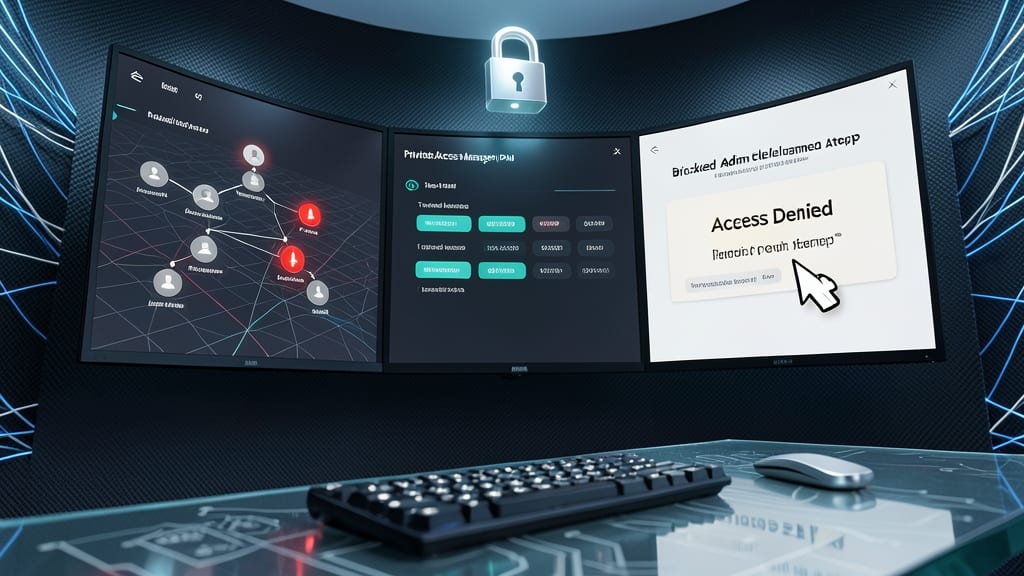
What if your IT team could finally stop the "accidental admin" problem? A Privileged Access Management (PAM) system enforces the least privilege principle by default, ensuring no one gets permanent elevated access unless absolutely required—and even then, only for limited timeframes.
These systems go beyond basic permissions by creating time-bound admin sessions with automatic expiration and immutable audit trails for every action. For example, CyberArk Vault or BeyondTrust Privilege Management can grant temporary root access for server maintenance while logging every keystroke—critical for compliance with HIPAA, GDPR, or SOX. The best solutions also integrate with SIEM tools to flag suspicious behavior patterns during elevated sessions.
Ideal for organizations handling sensitive data like healthcare records or financial transactions, PAM systems are especially valuable for IT admins, DevOps teams, and compliance officers who need to maintain security without sacrificing operational efficiency. 🌟
Insider Threat Detection Framework

What if your biggest security risk isn't hackers—but your own employees? An Insider Threat Detection Framework shifts focus to user behavior analytics (UBA) that flags suspicious patterns before data breaches happen, whether from malicious insiders or accidental leaks.
These systems use machine learning to establish baseline activity (e.g., login times, file access frequency) and trigger alerts for deviations like unusual data transfers overnight or accessing files outside a user’s role. Solutions like Splunk User Behavior Analytics or IBM QRadar integrate with SIEM tools to correlate anomalies with real-time risk scores.
Ideal for industries handling highly sensitive data (finance, healthcare, legal), this framework protects against careless employees (e.g., sharing credentials) and disgruntled insiders—without relying solely on firewalls or external threat feeds. 💡
Secure Document Collaboration Platforms

Tired of chasing down lost documents or worrying about sensitive files lingering in shared drives after an employee leaves? Secure document collaboration platforms like Cryptomator or Box with encryption solve both problems at once.
These platforms encrypt files at rest and in transit, ensuring only authorized users can access them. With features like automatic version control and instant access revocation, you can track every edit and cut off terminated employees within minutes. Many also integrate with your existing workflows, so no steep learning curve for your team.
Perfect for legal teams, healthcare providers, or any business handling confidential client data—where compliance and control are non-negotiable. ✨
Automated Patch Management System

Unpatched software is the #1 entry point for cyberattacks—yet 60% of breaches exploit vulnerabilities with known fixes. An automated patch management system flips the script by deploying critical updates within 24 hours, often before attackers can weaponize them.
Top solutions like ManageEngine Patch Manager Plus or SolarWinds Patch scan your entire ecosystem—servers, endpoints, and IoT devices—then prioritize fixes based on severity and business impact. They even handle third-party software (like Adobe or Java) that often gets overlooked. With automated rollback capabilities, you eliminate downtime risks while maintaining compliance with frameworks like NIST or CIS controls.
This is non-negotiable for industries handling PCI DSS or HIPAA data, but even small teams benefit from the peace of mind. No more "we'll patch it later" excuses—just zero-day-proof resilience. ⚡
Cybersecurity Awareness Training Programs

Even with the best firewalls and encryption, 90% of breaches start with human error—often someone clicking a malicious link. Cybersecurity awareness training programs close this gap by turning employees into active defenders through realistic simulations and engaging modules.
Platforms like KnowBe4 or PhishMe deliver quarterly phishing simulations that mimic real attack vectors, while interactive modules teach how to spot CEO fraud schemes or social engineering tactics. The best programs track individual progress, showing which departments need extra reinforcement—like HR or finance, where sensitive data risks are highest.
This isn’t just compliance checkbox training—it’s a continuous battle-tested setup that adapts to new threats, making it ideal for teams where human interaction is the weakest link. ✨
Incident Response Playbooks Development

When seconds count during a breach, Incident Response Playbooks turn chaos into action. These battle-tested documents map out every step—from initial detection to containment and recovery—so your team responds with precision, not panic.
Each playbook includes predefined roles (e.g., incident commander, communications lead) and communication protocols tested quarterly to ensure clarity under pressure. Tools like Splunk or IBM Resilient integrate seamlessly to automate alerts and escalations, while templates from NIST or ISO 27035 provide industry-standard frameworks. The result? Faster containment (studies show playbooks reduce breach resolution time by 40%).
Perfect for compliance-heavy industries (healthcare, finance) or any team handling sensitive data, these playbooks ensure consistency—whether the breach hits at 3 AM or during a major product launch. 💪